On January 3, 2026, the US conducted a military operation in Caracas, Venezuela, leading to the capture of the former Venezuelan president, Nicolás Maduro. But why did this happen, and what does it mean for the US and Venezuela?
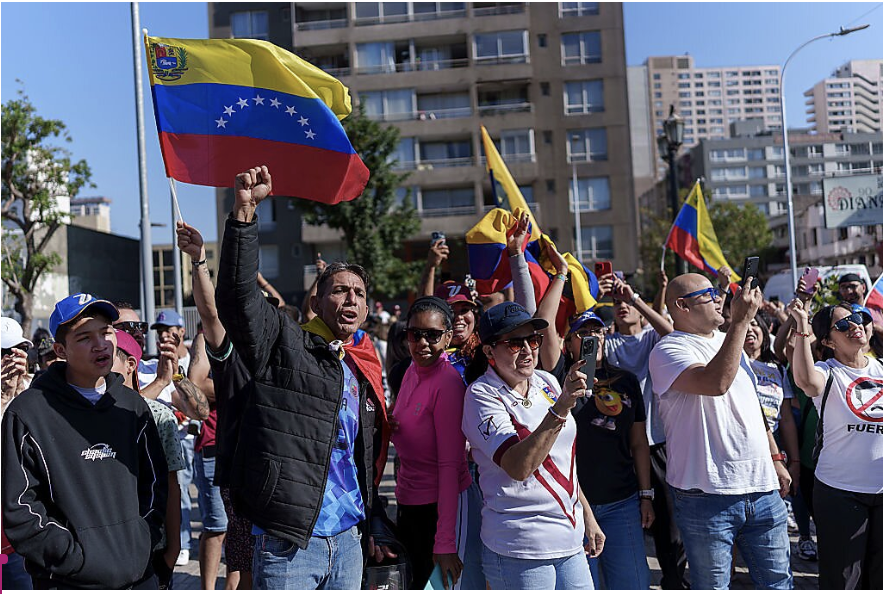
Since April 2013, Maduro, a self-proclaimed socialist leader, has ruled Venezuela as a dictator who kept his country in economic turmoil and heavily punished anyone who went against him until his capture on January 3, 2026, by US forces. Maduro is a corrupt dictator who stayed in power through rigged elections, forcing people with opposing views into persecution or incarceration. While people suffered and the economy declined, Maduro and high-level officials were living their best lives using government resources. Under his leadership, Venezuela’s economy collapsed while he was literally singing and dancing in his campaigns. Following his third reelection, thousands protested against him and the illegitimacy of the election, which was seen as illegitimate even by the US. This is because most believed that Maduro’s competitor, Edundo González, had truly won the election. Unfortunately, the protesters were jailed and killed. Maduro’s leadership was so horrible that 7.9 million people, or 23% of Venezuela’s population, fled Venezuela under his rule. He maintained his rule through Venezuela’s secret police, with people who opposed him mysteriously disappearing or being persecuted, including González, who fled Venezuela after Maduro’s regime ordered his arrest.
Over the past few months, tensions have risen between Venezuela and the US. Trump has branded Maduro a “narco-terrorist” and has sent naval forces to Venezuela as threats, aiming to get Maduro to step down. Maduro has been seen as an enemy to the US not only for the government’s policies, but for alleged cocaine trafficking and supporting gangs, harboring stolen US oil, and Maduro’s alliances with other enemies like Iran, China, and Russia. Maduro has even supported terrorist groups like Hezbollah. The US DOJ quoted Attorney General Barr saying, “Maduro and a number of high-ranking colleagues allegedly conspired with the FARC, causing tons of cocaine to enter and devastate American communities.” Maduro has been accused of working with guerrilla groups and gangs to help smuggle drugs.
This isn’t the first time Trump has struck Venezuela. On September 15, Trump struck a dock in Venezuela, which he claimed was where people who were allegedly working for the ELN guerrilla group were allegedly filling these boats with drugs. Though there hasn’t been any further commentary from either side, the Colombian president, Gustavo Petro, claims that these strikes targeted a cocaine factory part of the ELN guerrilla group and the Venezuelan gang Tren de Aragua. When asked about who made the attacks, Trump refused to answer, stating, “I know exactly who it was, but I don’t want to say who it was.” Over time, the US has struck Venezuelan boats and other convoys, which are allegedly drug boats, killing 115 people. Although the US has claimed the convoys struck were drug boats, people are questioning the legitimacy of that, including the Colombian president, who has claimed that these were, in fact, fishing boats. Maduro has also claimed that Trump has used the war on drugs as a cover to try to overthrow him.
The US’s “stolen oil” has been a big target for Trump’s attacks and “takeover” of Venezuela, and was used as a way to justify the attacks on Venezuela. Many people are concerned that this is just a power grab for the US. People are concerned about Trump only annexing Venezuela and taking their oil because Venezuela’s oil reserves are the most abundant in the world. Even though he has claimed that he is going to run Venezuela, people are still living in fear, and the Venezuelan government is still in power.
Many leaders are in support of Trump, including in the UK and Argentina. Many others condemned Trump for his actions, including Russia, China, Iran, Brazil, and other nearby Latin countries, who see this as an act of imperialism and an attack on a country’s sovereignty. Many people within the US are protesting Maduro’s capture, saying that we have no place being in Venezuela, while there are also opposing views in support of Trump, who are celebrating the capture of Venezuela.
Delcy Rodríguez, Maduro’s vice president, has been sworn in, but only as an interim president. Trump has been quoted as saying, “She’s essentially willing to do what we think is necessary to make Venezuela great again.” This suggests that Rodríguez may be acting as the president, with Trump and the US exerting control over her actions. Trump has stated that if Rodríguez doesn’t cooperate, “[Rodríguez] is going to pay a very big price, probably bigger than Maduro.” Trump aims to lead Venezuela through “A safe, proper and judicious transition”. Even though Maduro and his wife may have been captured by the US, and the US claims that they are going to temporarily run Venezuela, forces and people allied with Maduro remain in power, so Venezuela is still under similar rule. People in Venezuela are still living in fear, with one student saying, “‘There are still allies of Maduro that are in power, so there are a few reasons why we don’t celebrate outside of our houses.” Even though Venezuelans are happy for Maduro’s capture, they are not able to celebrate because they are still suffering under Maduro’s regime. This is just the beginning of a long struggle to eliminate Maduro’s dictatorship.
Right now, Maduro and his wife, Cecilia Flores, are facing charges of drug trafficking and are being tried in New York, and have pleaded not guilty. People within our country are fighting over whether the US had the right to capture Maduro or whether the US was wrong for attacking and capturing Maduro. This fight is also happening between countries, only furthering tensions between the US and countries like China and Russia. Even though Maduro may be out of power, all of his allies and officials are still in power. We can only tell with more time what will happen with Venezuela.